
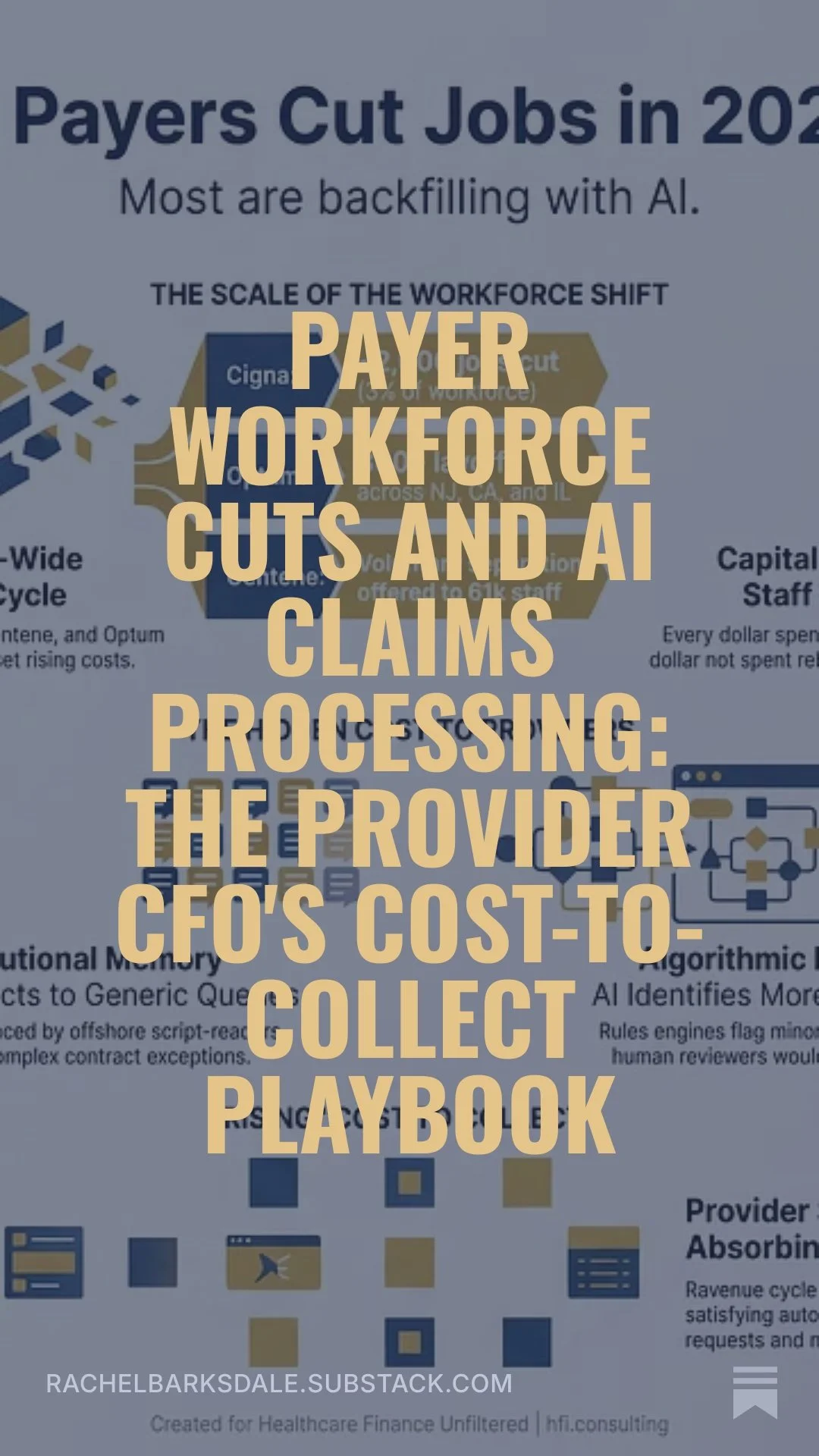
Payer Workforce Cuts and AI Claims Processing: The Provider CFO's Cost-to-Collect Playbook
Payers have cut staff at more than a dozen organizations in 2026, and they are backfilling with AI. For provider CFOs, that trade shows up quietly in a cost-to-collect number nobody can pin on anyone. Here is how to make it visible and negotiable.
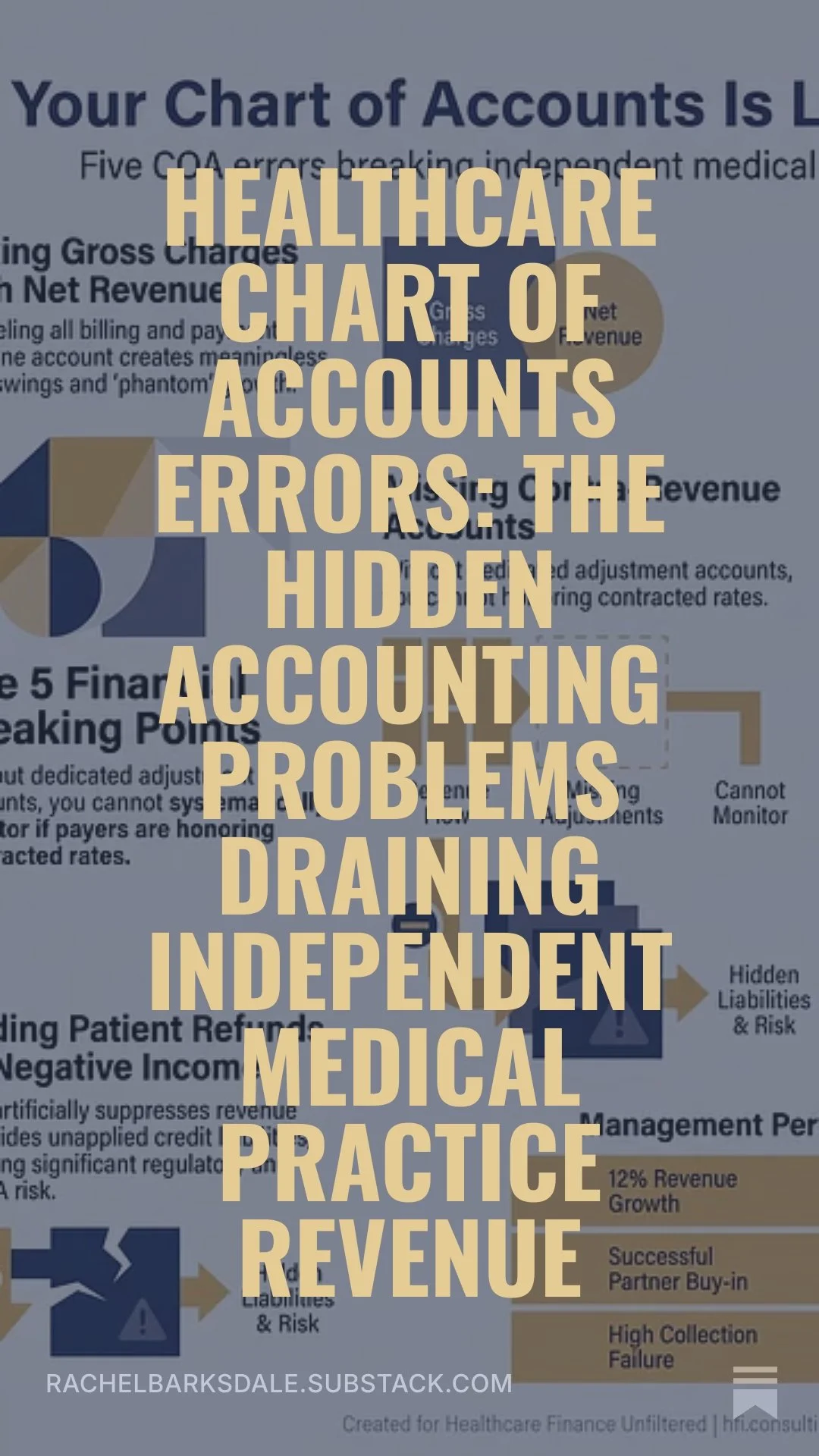
Healthcare Chart of Accounts Errors: The Hidden Accounting Problems Draining Independent Medical Practice Revenue
Most independent medical practices are running accounting infrastructure built for a retail shop. When your chart of accounts cannot capture how healthcare revenue actually works, the financial statements are not obviously wrong. They are quietly wrong, and the damage surfaces at the worst possible moment.
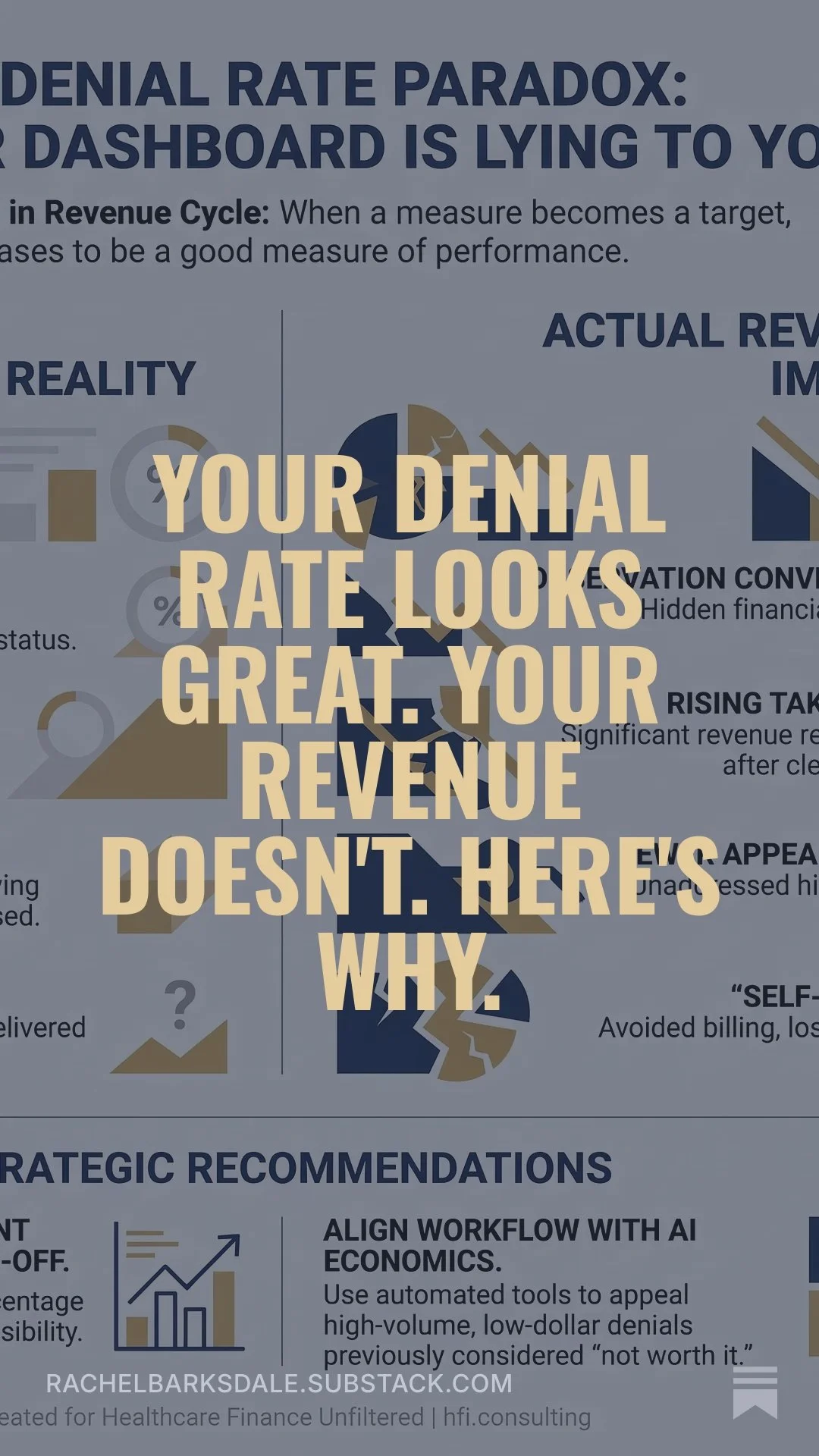
Your Denial Rate Looks Great. Your Revenue Doesn't. Here's Why.
A new MGMA poll found that 48% of medical practices say denials are their biggest revenue leak. At the same time, revenue cycle leaders at a major industry conference just argued that chasing a lower denial rate can actually cost you money. Both things are true. That is the problem.
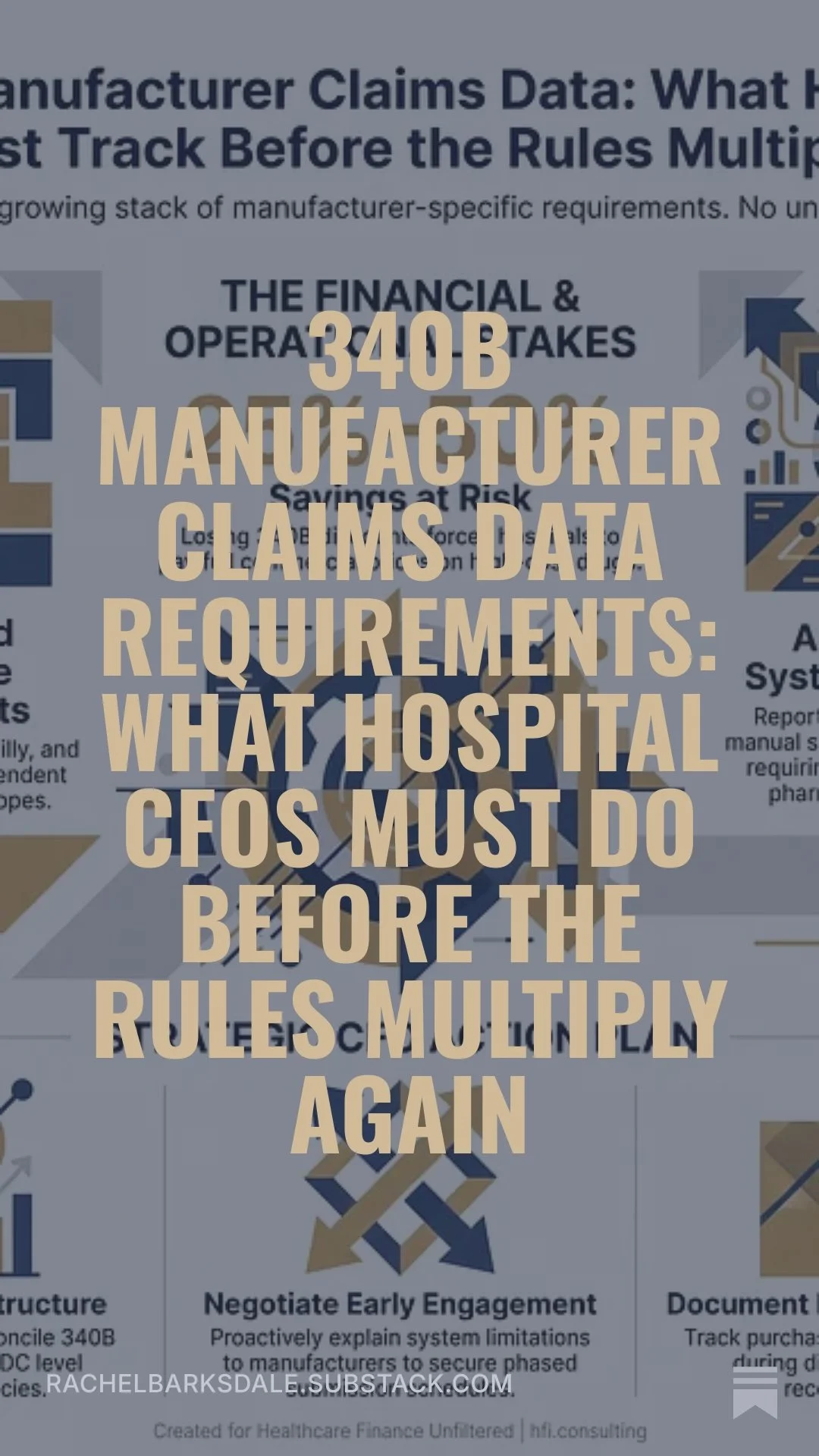
340B Manufacturer Claims Data Requirements: What Hospital CFOs Must Do Before the Rules Multiply Again
Johnson & Johnson's 340B claims data requirements took effect September 15. J&J is the latest in a growing list of manufacturers implementing their own reporting policies on their own timelines. Hospital CFOs are now managing a fragmented compliance landscape with no uniform standard in sight.
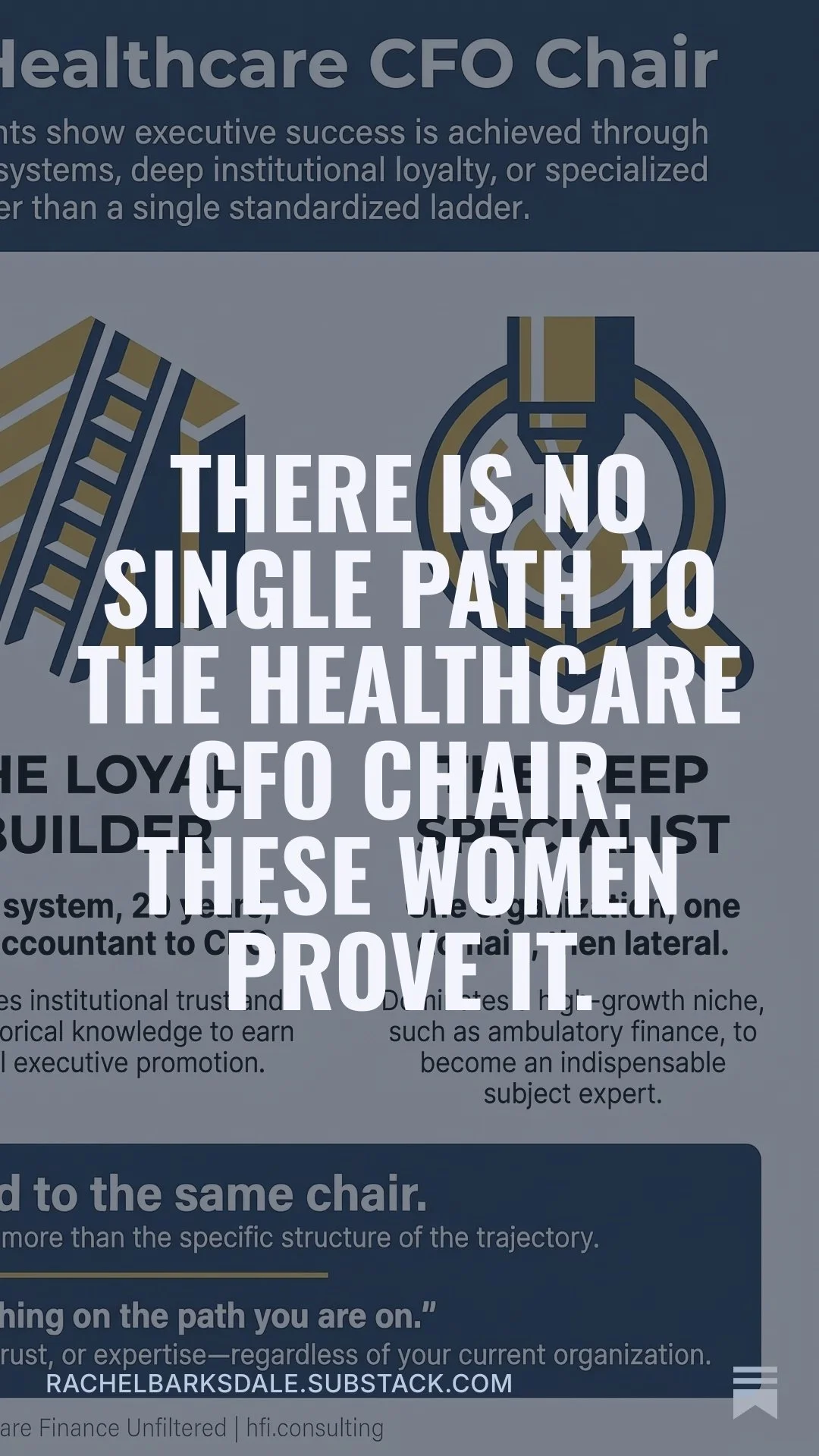
There Is No Single Path to the Healthcare CFO Chair. These Women Prove It.
If you have spent any time in healthcare finance, you have probably constructed a mental picture of what a CFO career is supposed to look like. A straight line upward through progressively larger organizations, ideally with a prestigious system name or two along the way. A controller role somewhere in the middle. A VP title before 40. Maybe a CPA before the MHA or MBA.

Profitable on Paper, Broke in Reality: The Cash Flow Crisis Hiding Inside Independent Physician Practices
Your P&L says the practice made money last quarter. Your bank account is short on payroll. This is one of the most common financial problems in independent physician practices, and the payer environment is making it worse. Here is what is actually creating the gap and what to do about it.

McKesson Data Breach: The CFO's Guide to What a "Contained" Cyberattack Actually Costs
McKesson confirmed a cyberattack on August 25, 2026, and has since told the market that core distribution operations remain intact. What it has not told the market is what this will actually cost. That number is still being built.
That is exactly what CFOs need to understand right now.
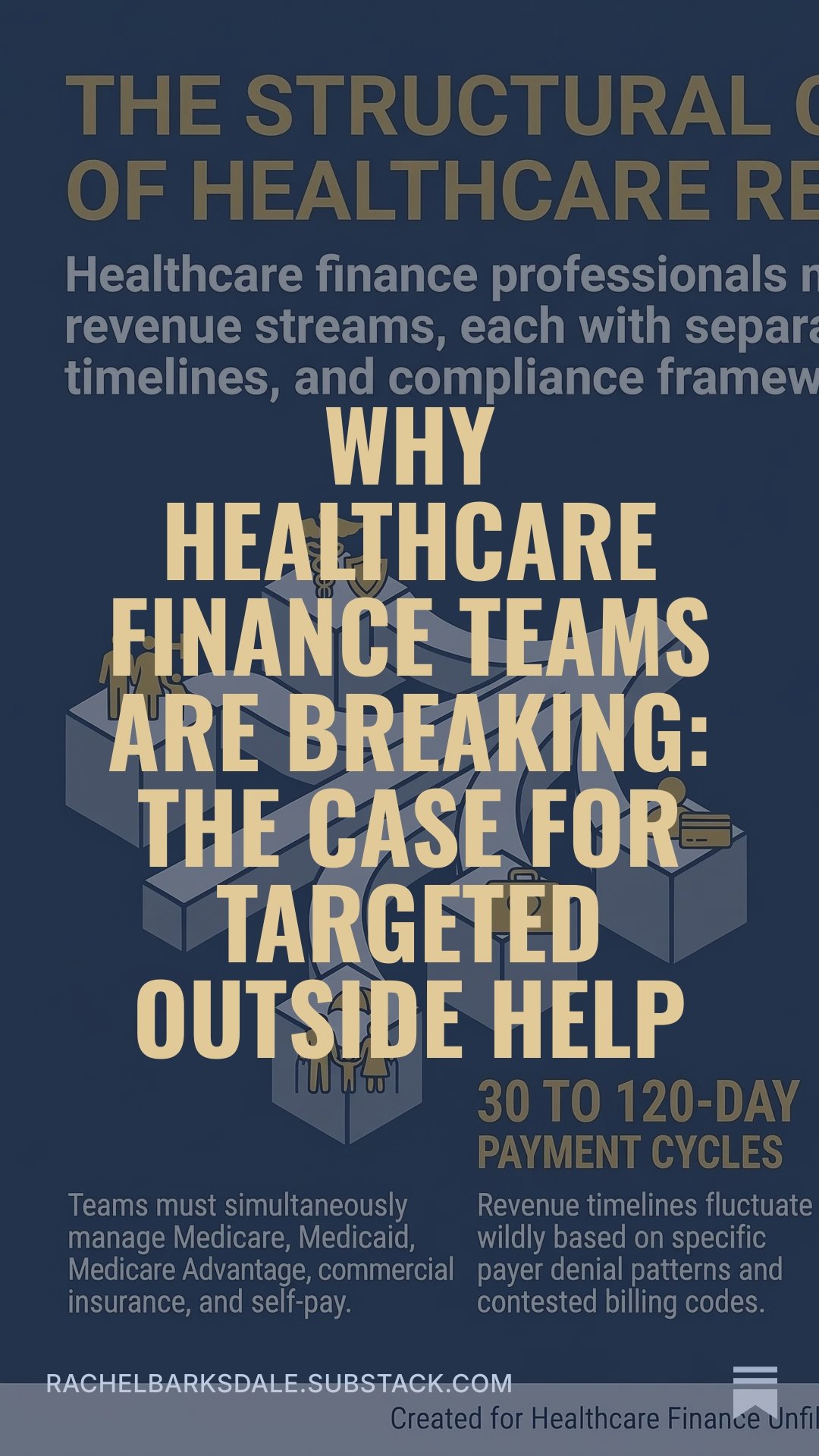
Why Healthcare Finance Teams Are Breaking: The Case for Targeted Outside Help
Hospital finance teams are not burning out because they are bad at their jobs. They are burning out because the work keeps accumulating and the headcount does not, and in a labor market that has made leaving harder, the people absorbing the gap are staying just long enough to lose the things that made them good at it.
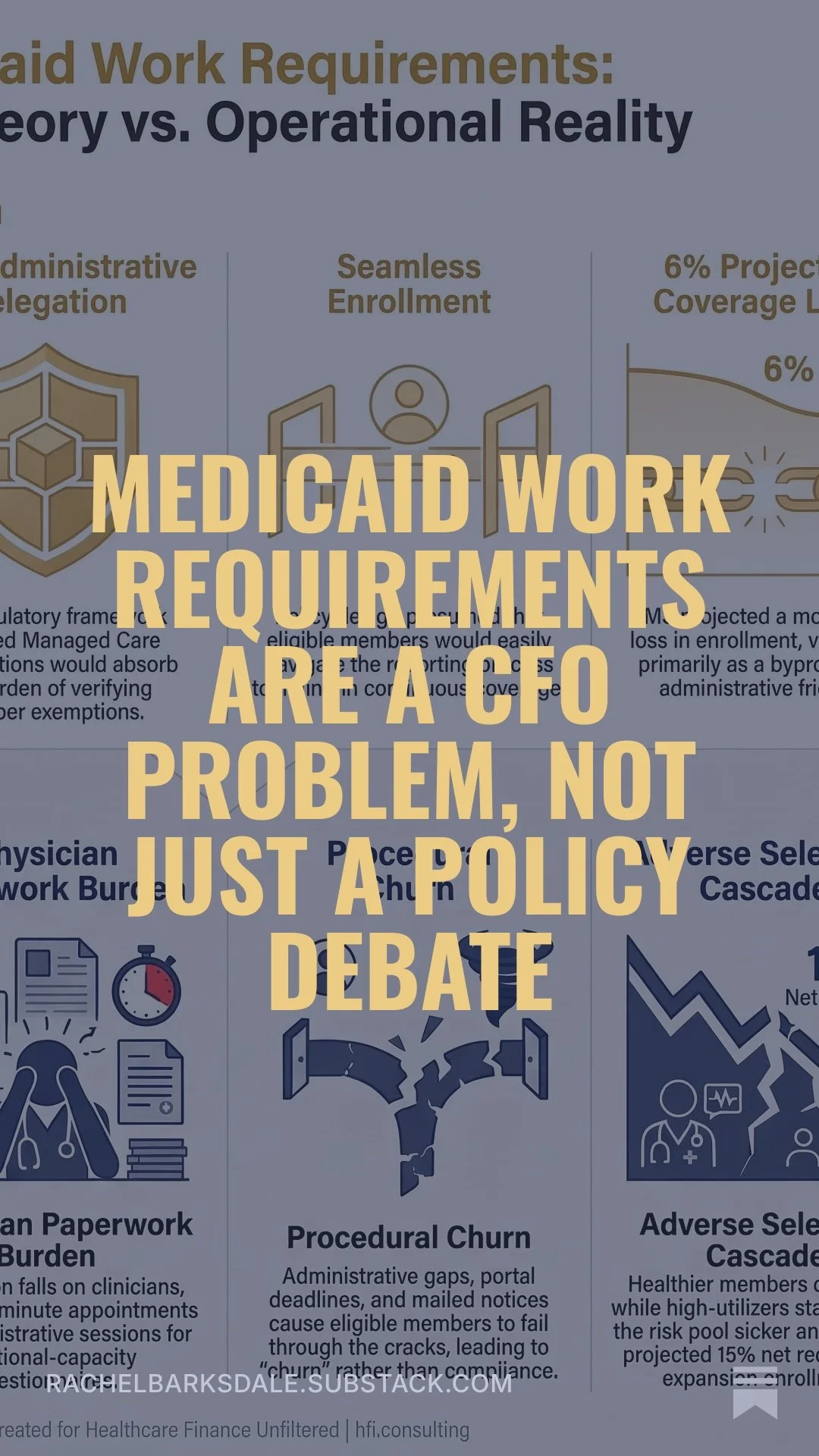
Medicaid Work Requirements Are a CFO Problem, Not Just a Policy Debate
The MedPage Today piece published today by Dr. David Hill, a pulmonologist and former American Lung Association board chair, opens with a sentence that should stop every healthcare finance leader cold: "My job has become mounds of paperwork."
He is not exaggerating. And that paperwork does not stay in the exam room. It migrates directly to your balance sheet.
The Medicaid work reporting mandate, enacted under Public Law 119-21 and currently being implemented through a CMS Interim Final Rule, requires non-disabled adults ages 19 through 64 on Medicaid expansion to complete 80 hours per month of qualifying activity or document why they cannot. The public comment period closed July 31, 2026. The statutory deadline is January 1, 2027.
Finance leaders on both sides of the payer-provider divide have approximately four months to model what this does to their operations.
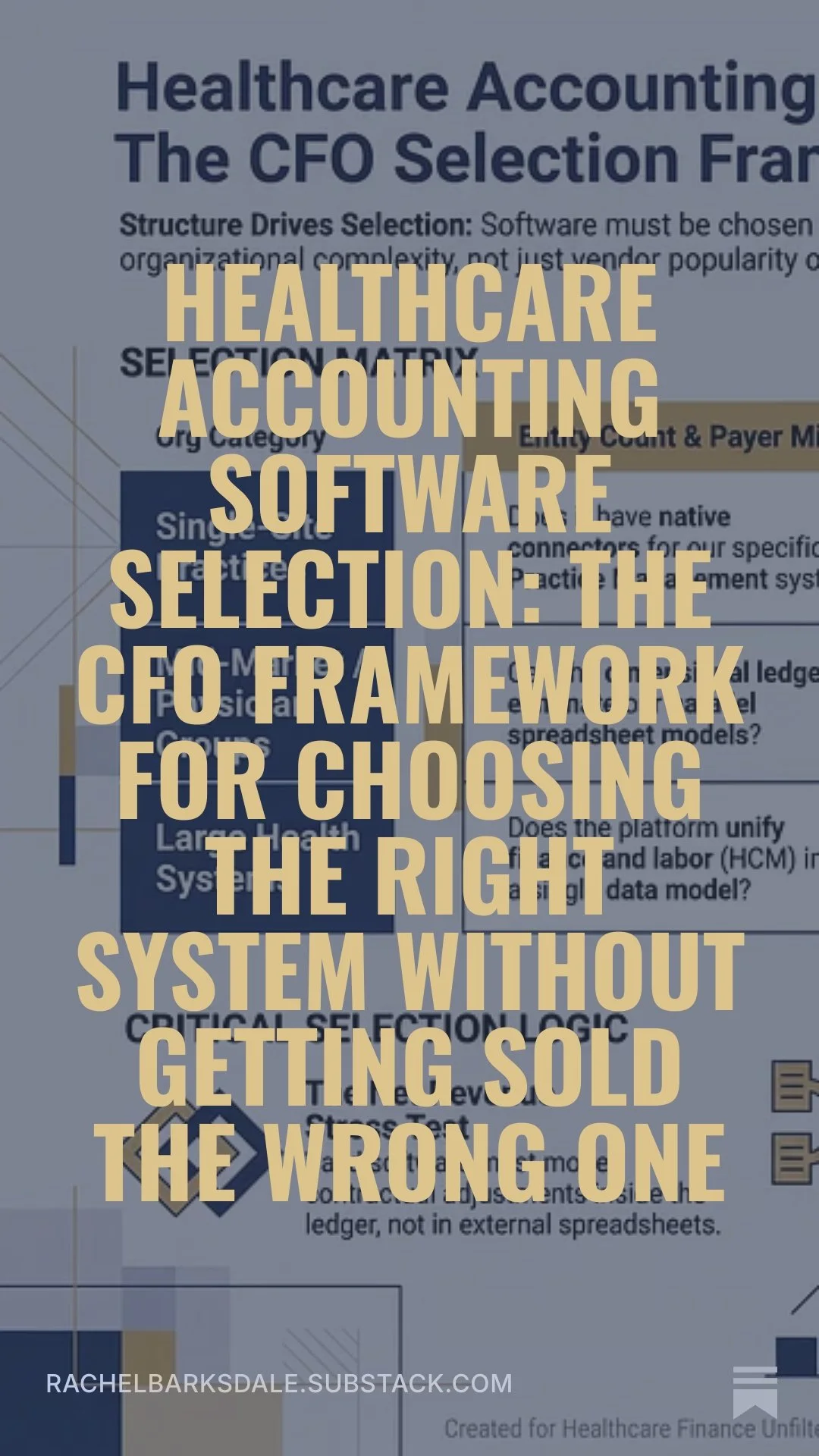
Healthcare Accounting Software Selection: The CFO Framework for Choosing the Right System Without Getting Sold the Wrong One
Medicare cost report season is the fastest stress test of whether your accounting system was designed for healthcare or just adapted to tolerate it. If your team is rebuilding the trial balance mapping from scratch every year, or maintaining a parallel spreadsheet model to calculate net patient service revenue, your general ledger is working against you. That friction has a dollar cost attached to it.
The accounting software conversation has gotten louder in 2026 as health systems replace aging Lawson and legacy on-premise deployments, as multi-location physician groups scale past what QuickBooks can carry, and as behavioral health and post-acute providers face growing grant and fund accounting obligations. The vendors will tell you their platform is built for healthcare. The harder question is whether it is built for your healthcare.
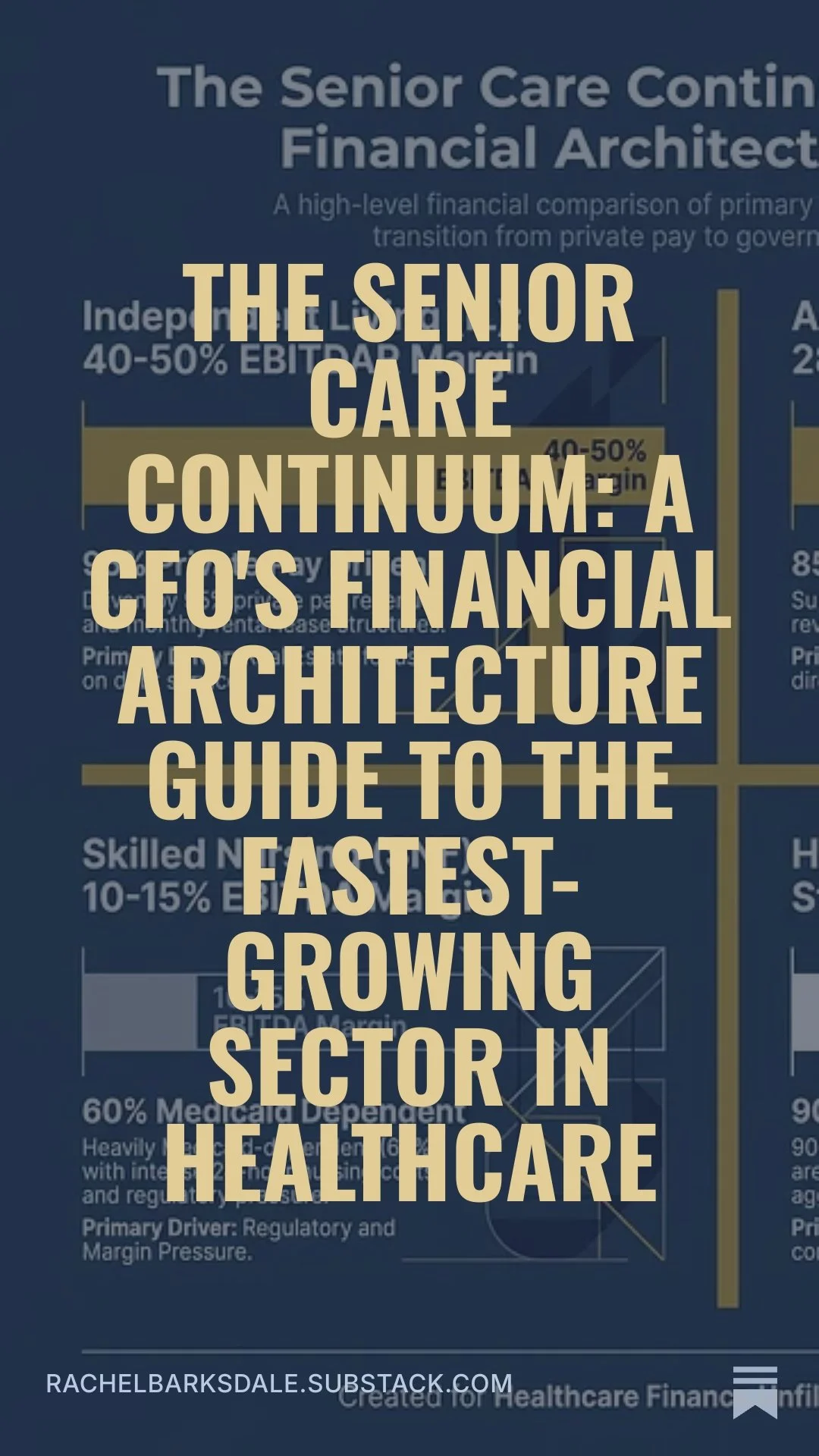
The Senior Care Continuum: A CFO's Financial Architecture Guide to the Fastest-Growing Sector in Healthcare
The 65-plus population in the United States is projected to reach 73 million by 2030, and the senior living sector needs 806,000 additional units to absorb that demand. Only 322,000 are expected to be delivered. For healthcare finance leaders, that gap is not a policy headline. It is a decade of supply-constrained revenue opportunity sitting on top of one of the most financially complex care spectrums in the industry.
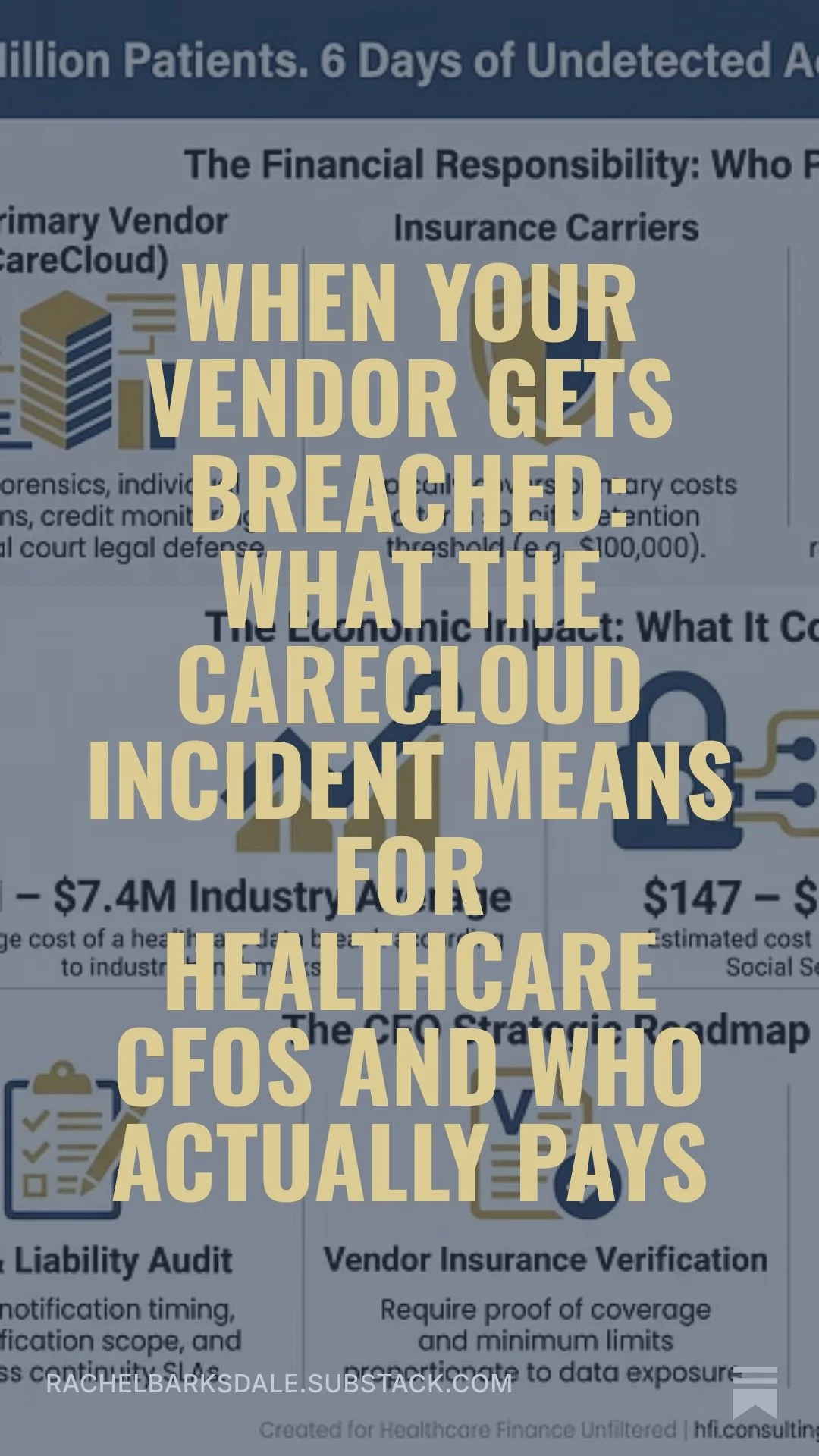
When Your Vendor Gets Breached: What the CareCloud Incident Means for Healthcare CFOs and Who Actually Pays
A health IT vendor serving more than 40,000 providers just disclosed that an unauthorized third party accessed one of its cloud environments for six straight days before anyone noticed. By the time CareCloud Health detected the intrusion, 3.76 million patient records had potentially been exfiltrated. The breach happened in March. Individual notification letters went out months later. Class action lawsuits are already consolidated in federal court. If your organization uses a vendor like this, your BAA is your first line of defense. Most of them are not written well enough to hold.
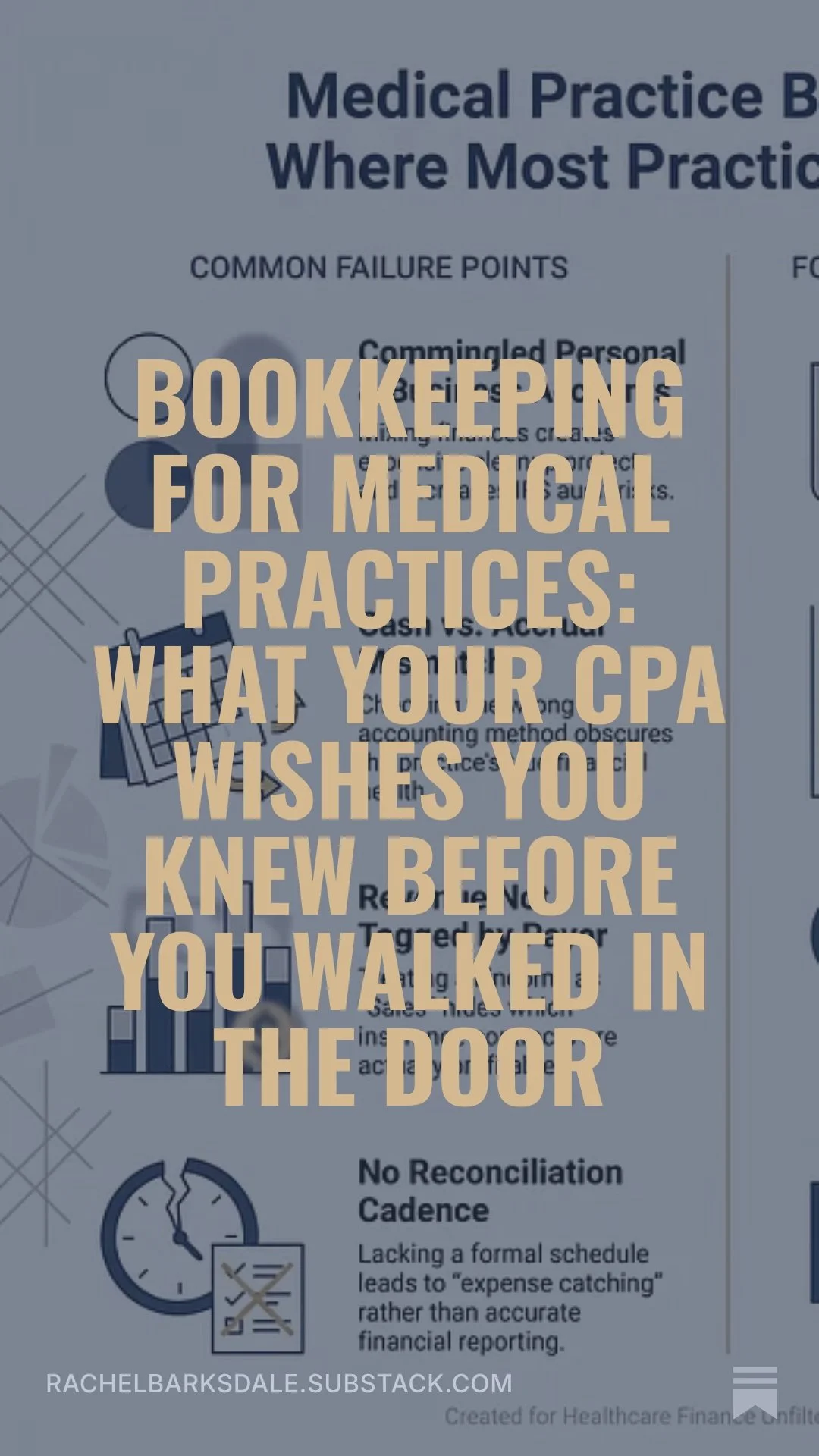
Bookkeeping for Medical Practices: What Your CPA Wishes You Knew Before You Walked In the Door
Tax season is when the truth comes out. Every year, medical practices hand their CPA a shoebox of records, or worse, a QuickBooks file with years of workarounds baked in, and wonder why the process takes so long and costs so much. The answer is almost always the same: the books were not built for a medical practice. They were built for a generic small business, and healthcare is not a generic business.
If you are opening a new practice, cleaning up years of financial disorganization, or trying to get ahead of your next filing, this article is for you.
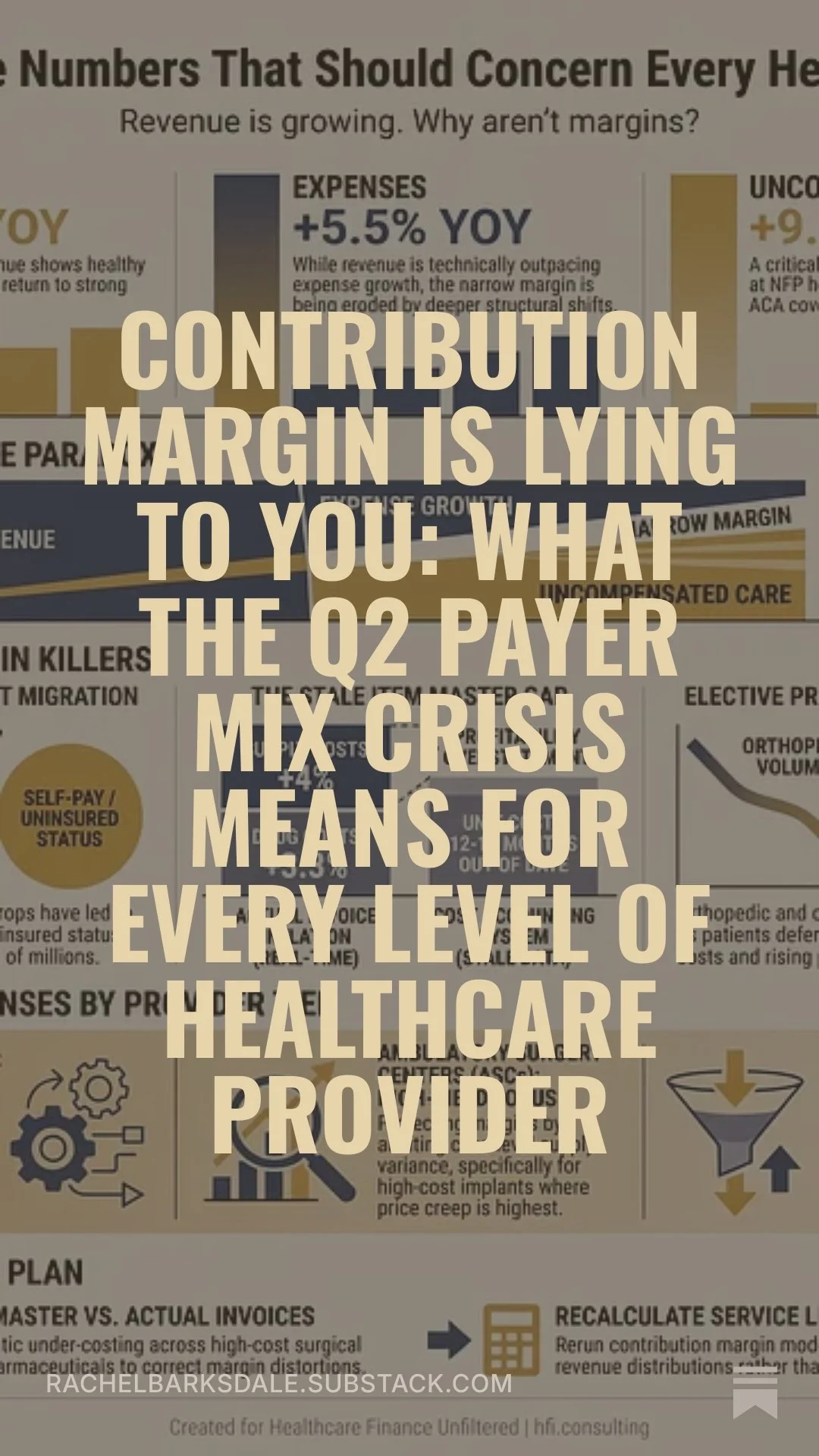
Contribution Margin Is Lying to You: What the Q2 Payer Mix Crisis Means for Every Level of Healthcare Provider
The Q2 numbers are in, and they tell a story that should make every healthcare CFO stop and look harder at the line between revenue and margin.
Gross operating revenue grew 5.9% year over year in May, according to Strata Decision Technology data. Individual hospital expenses rose 5.5% in the same period. Supplies up 4%. Labor up 3.9%. Drugs up 3.3%. On paper, revenue is outpacing expenses. So why are operating margins under siege?
Because the numbers on your income statement and the numbers in your cost accounting system are not telling the same story.
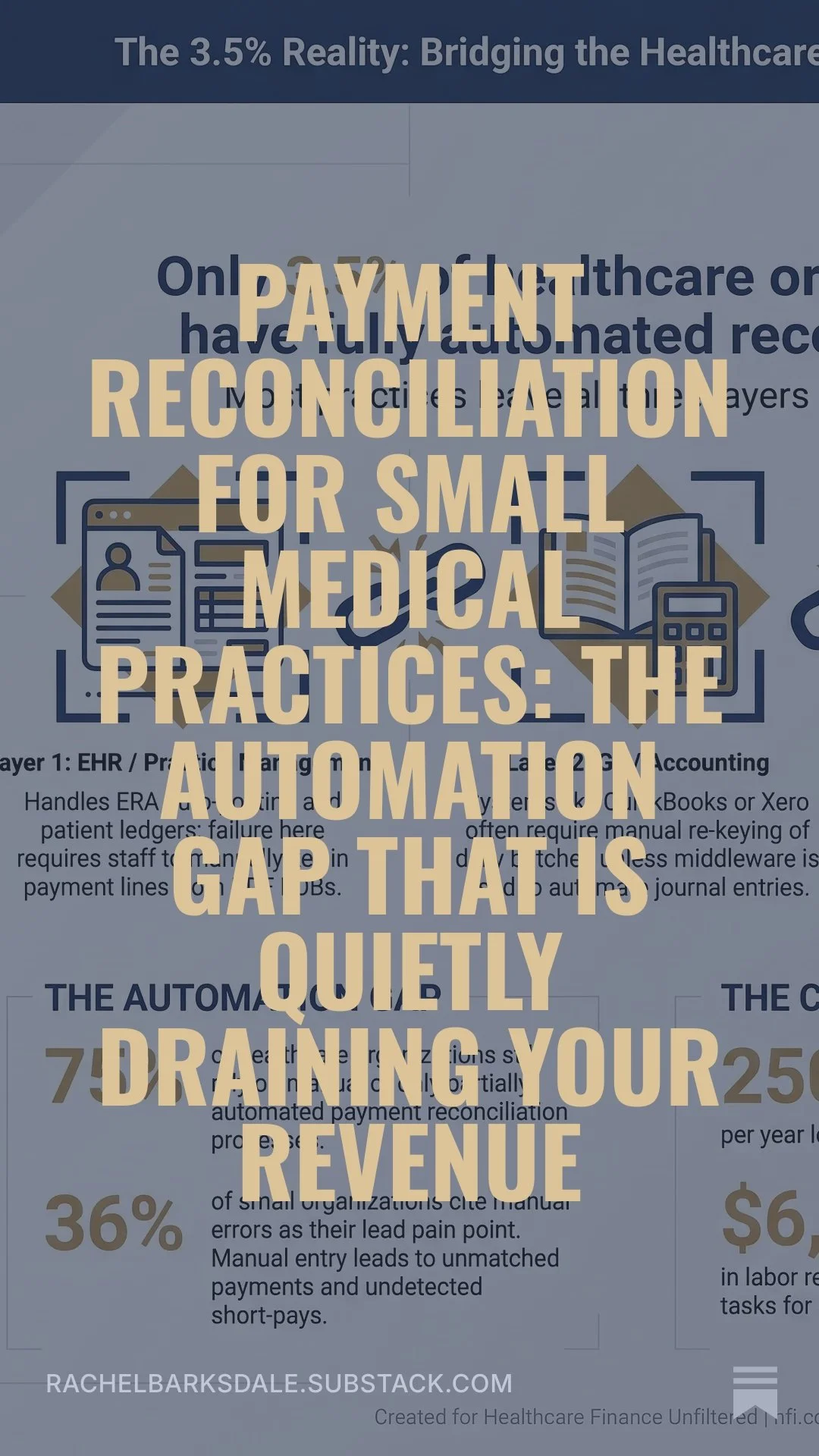
Payment Reconciliation for Small Medical Practices: The Automation Gap That Is Quietly Draining Your Revenue
Your billing software posted the ERA. Your bank shows the deposit. But does anyone on your team actually know those two numbers match? For most independent practices, the honest answer is: not until month-end, not without a spreadsheet, and not without someone spending hours they do not have.
A Wells Fargo survey conducted by HFMA in September 2025 found that just 3.5% of healthcare organizations have fully automated their reconciliation processes. More than 22% still rely on mostly manual workflows. And 72% describe their processes as only partially automated. Those numbers came from a sample that included large hospital systems with full finance departments and enterprise technology budgets.
For a practice with 3 to 8 providers, the gap is almost certainly larger.
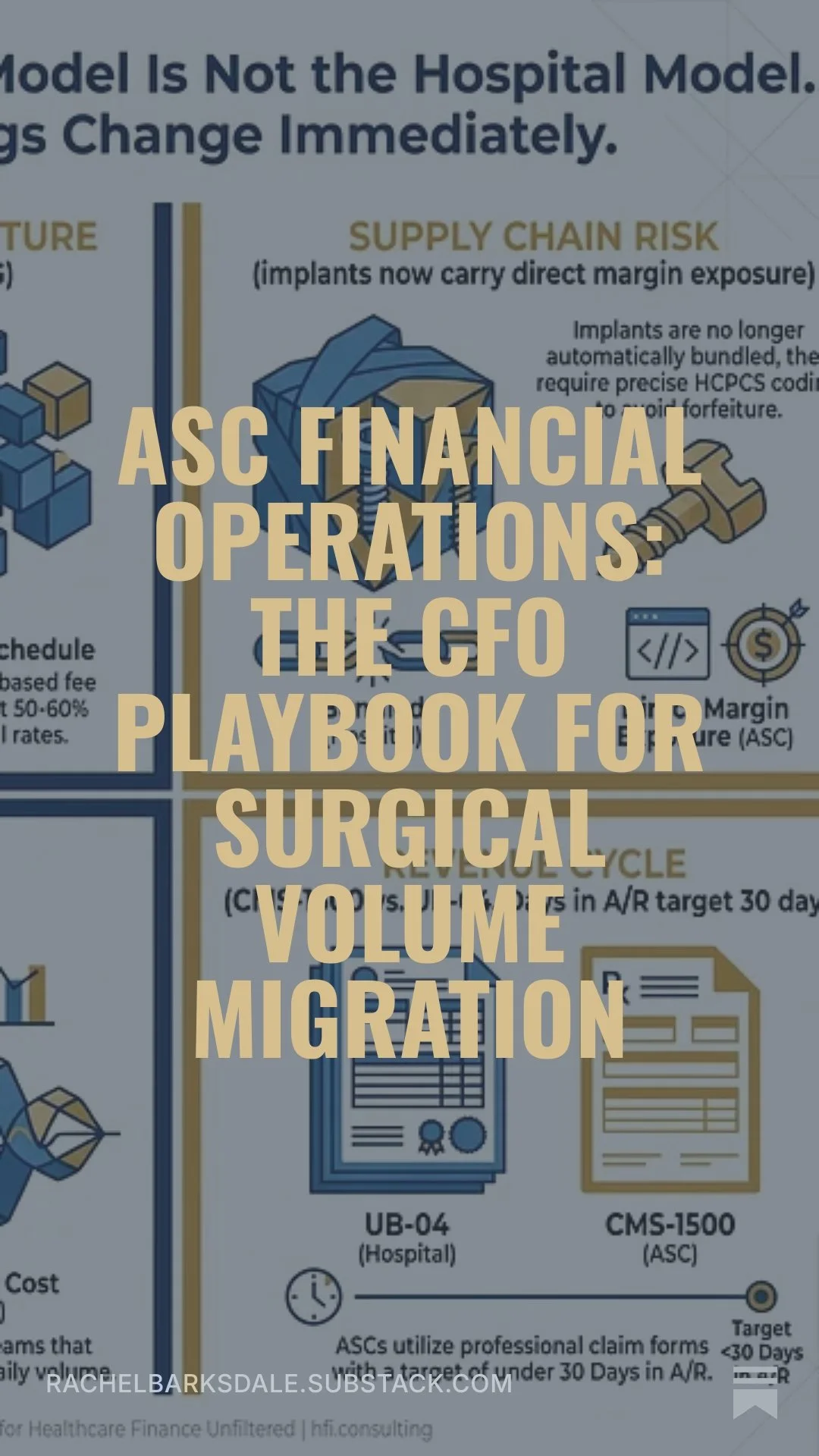
ASC Financial Operations: The CFO Playbook for Surgical Volume Migration
The migration of surgical cases from hospital inpatient ORs to Ambulatory Surgery Centers is no longer something CFOs can plan around as a future state. CMS and commercial payers accelerated this years ago. What is different now is the scale. The financial mechanics of an ASC are fundamentally different from anything the hospital accounting model prepares you for, and that gap is where margin disappears.
If your perioperative finance strategy still treats the ASC as a smaller version of the main OR, the leakage is already happening.
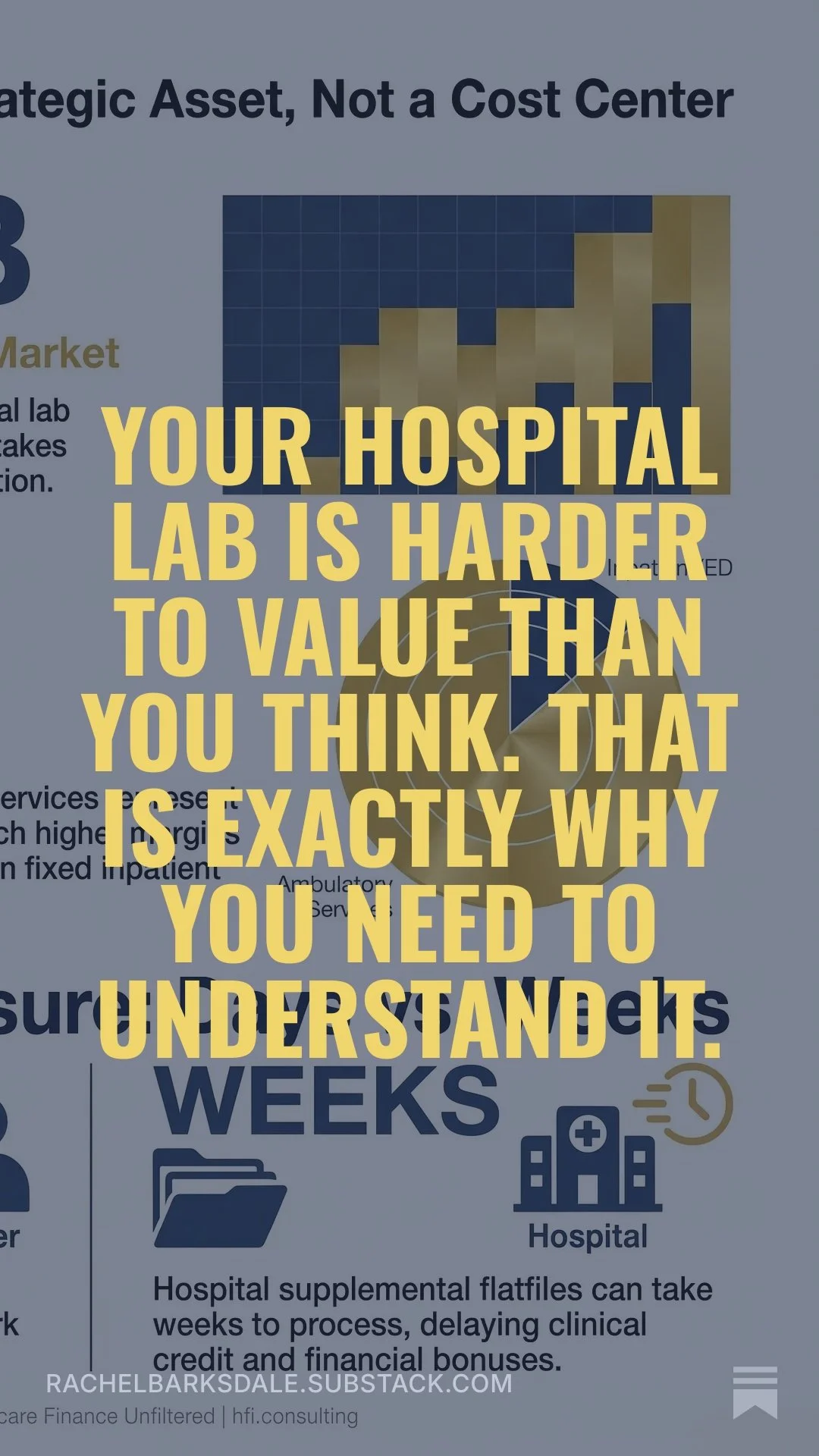
Your Hospital Lab Is Harder to Value Than You Think. That Is Exactly Why You Need to Understand It.
Your hospital laboratory is probably on your cost report as a cost center. That classification is not wrong. Lab cost accounting is genuinely difficult, fixed overhead is substantial, and separating inpatient costs from ambulatory contributions is one of the harder analytical problems in health system finance. But treating the lab as purely a cost center, without understanding what it generates in margin and in data value for the broader care ecosystem, means you are making strategic decisions with an incomplete picture.
The commercial lab industry understands that picture very well. It is worth understanding it yourself.
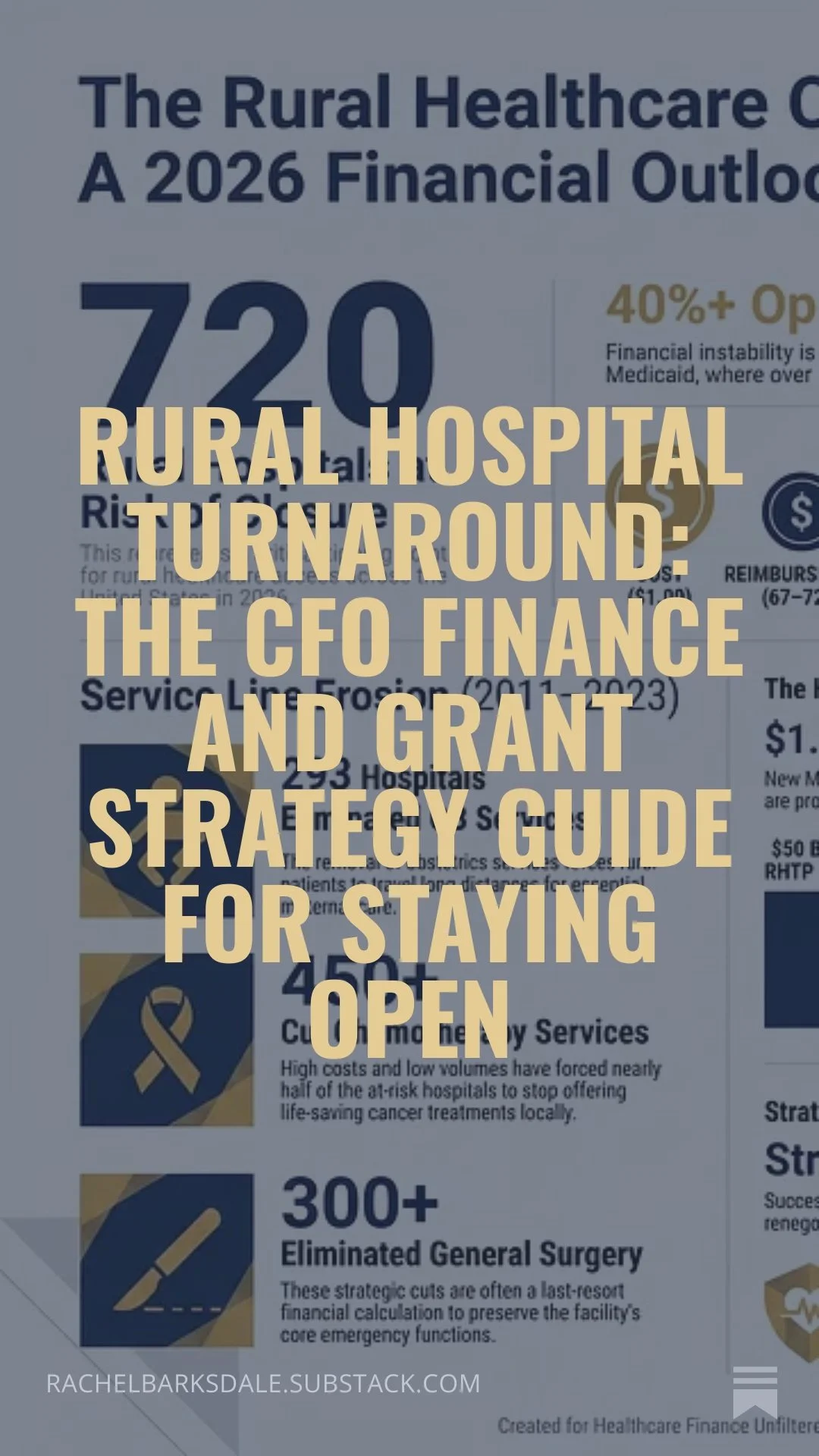
Rural Hospital Turnaround: The CFO Finance and Grant Strategy Guide for Staying Open
Seven hundred twenty rural hospitals are currently at risk of closure in the United States. One of them shut its doors last month after 101 years of serving its community. The question healthcare finance leaders need to answer right now is not whether this crisis is real — it is — but whether your organization has a financial strategy to survive it or is simply waiting for the next grant cycle.
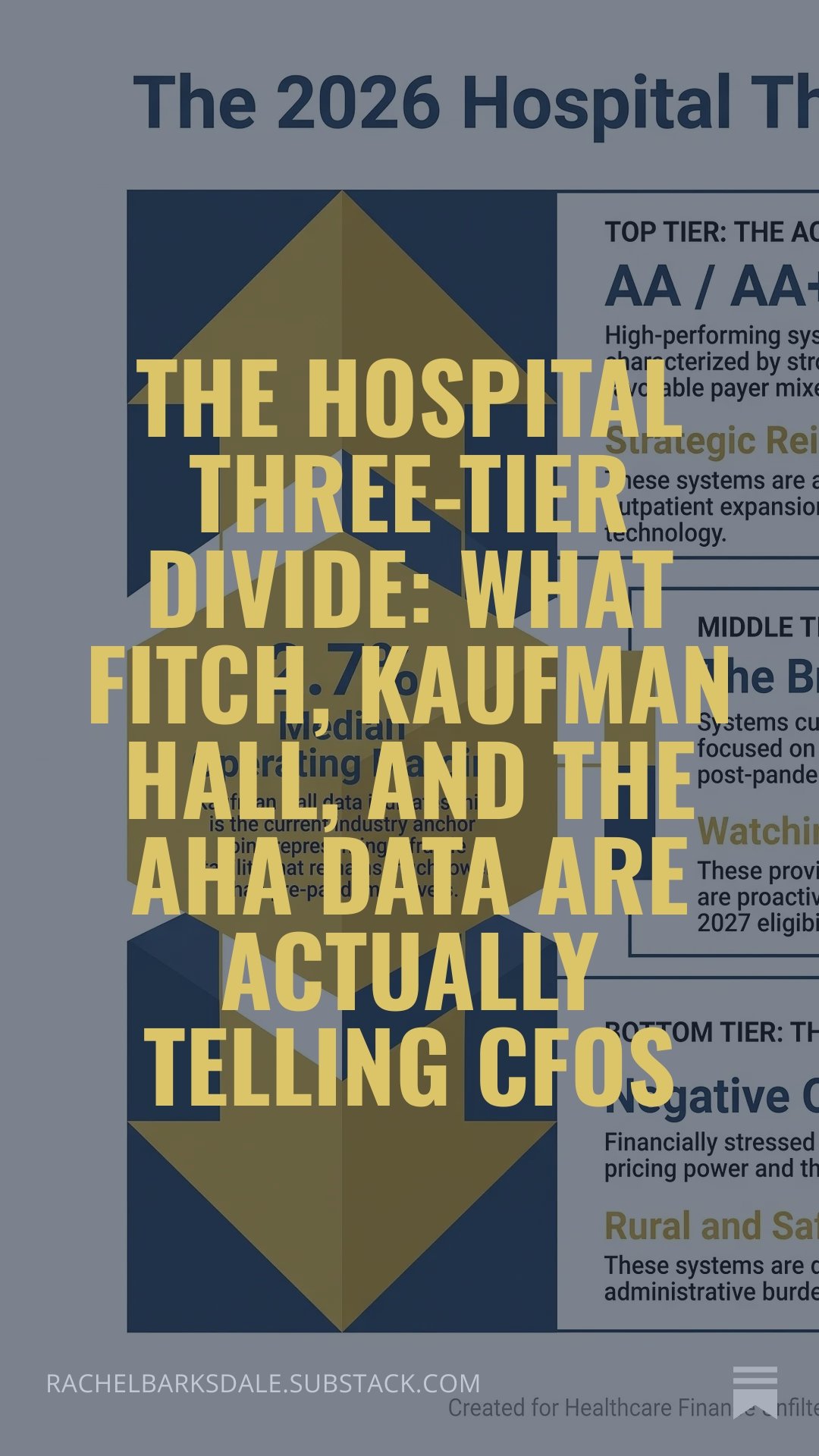
The Hospital Three-Tier Divide: What Fitch, Kaufman Hall, and the AHA Data Are Actually Telling CFOs
H.R. 1 hasn't even fully landed yet, and the financial gap between well-capitalized health systems and everyone else is already the largest it has ever been. If your system sits anywhere outside the top tier, the window for proactive positioning is closing faster than the timeline suggests.
Three major data sources dropped within months of each other. Fitch Ratings maintained a neutral 2026 outlook for U.S. not-for-profit hospitals. Kaufman Hall reported a 2.7% median operating margin as of October. The AHA's Costs of Caring report documented $43 billion in annual insurer-related administrative spend. Individually, each is a data point. Together, they describe a structural divide that will define the next three to five years of health system finance.
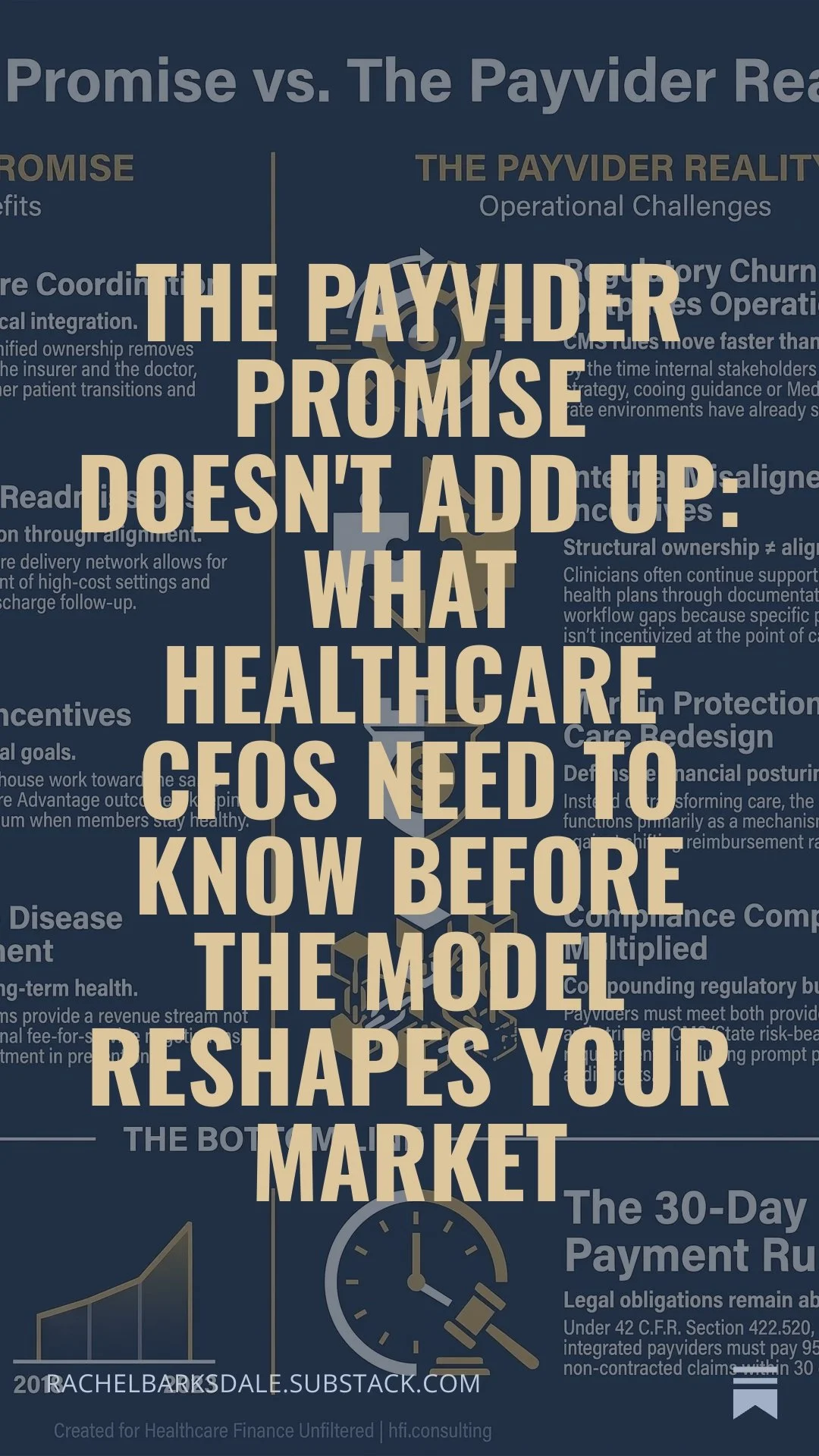
The Payvider Promise Doesn't Add Up: What Healthcare CFOs Need to Know Before the Model Reshapes Your Market
More than half of all Medicare enrollees are now in a Medicare Advantage plan. That single fact is quietly restructuring every contract, care model, and capital decision in your market. The payvider model, which promises to solve the friction between payer and provider by merging them into one organization, is the industry's current answer to that pressure. Before you buy the pitch, there are some things you should know about how it actually works once the press release is filed.